The Face of Slavery & Other African American Photographs — American Museum of Photography
|
|
|


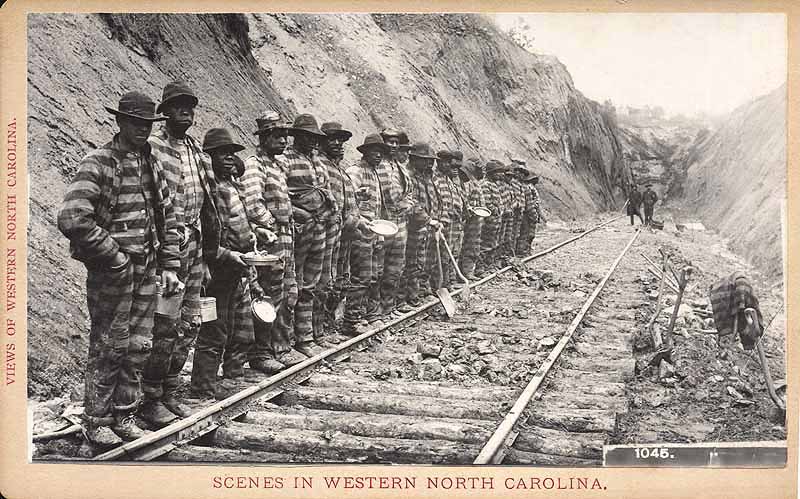
Thomas H. Lindsey (active Asheville, North Carolina):
“Stripes but no Stars”
Platinum print, circa 1892, 5 x 8 inches
|
Judging from the wood engraving of Lindsey’s studio on the back of the mount, this photograph was printed after Lindsey’s 1890-1892 partnership with E. E. Brown ended; Brown’s name has been removed from the signs in the picture. The title comes from Lindsey’s catalogue of photographs for sale, where images are listed by negative number. A different view is known with the same title and number, perhaps because the negative used for this image was cracked in the lower right hand corner and needed to be replaced. The studio sold photographs in this size for 25 cents each or $2.50 per dozen. Views of North Carolina scenery made up the majority of Lindsey’s subjects. “Stripes but no Stars” appeared in a special section of the photographer’s catalogue — Class Z:
Labor unions campaigned against forced work by convicts in the 1890s, and won some important victories. But there was a powerful economic incentive to keep prisoners at work –and even to take in more prisoners for the purposes of convict labor:
|
Next Full-Size Image === Return to “The Face of Slavery” Gallery === Museum Home Page
Thanks to Ann Wright of the Asheville-Buncombe Library System for research assistance.
Copyright © MMI The American Photography Museum, Inc. All Rights Reserved.American Museum of Photography and the logo are Service Marks of The American Photography Museum, Inc.